Learning’s learning, and training’s training, right? Surely the same is true for sustainability learning: it’s just a matter of changing some content, while the standard training principles stay the same.
I don't agree. Here are my top four reasons why sustainability learning or training is different:
1. It’s personal
Sustainability touches on all aspects of our lives — it is inherently political, moral and ethical. That makes the positioning of learning important. We need to consider how it interacts with people’s values and identity, not just their working lives.
That’s why I spend time understanding an audience before designing learning: what they already know, what matters to them, where resistance might come from, and what will make sustainability relevant to their role.
I design learning that meets people where they are, not where we wish they were.
2. It’s complex
Sustainability is complicated. It interacts with almost every part of our society, economy and our lives.
In sustainability learning — and sustainability more generally — there’s often no simple ‘right’ answer. A sustainability consultant’s answer to almost any question could easily be ‘it depends’. It’s a cliché, but they’re right.
My job is to help people cut through that complexity and find their part in it. What’s within their capability? What are they motivated to do? What does their organisation give them the opportunity to influence? I use frameworks such as COM-B to turn those questions into practical learning that leads to action.
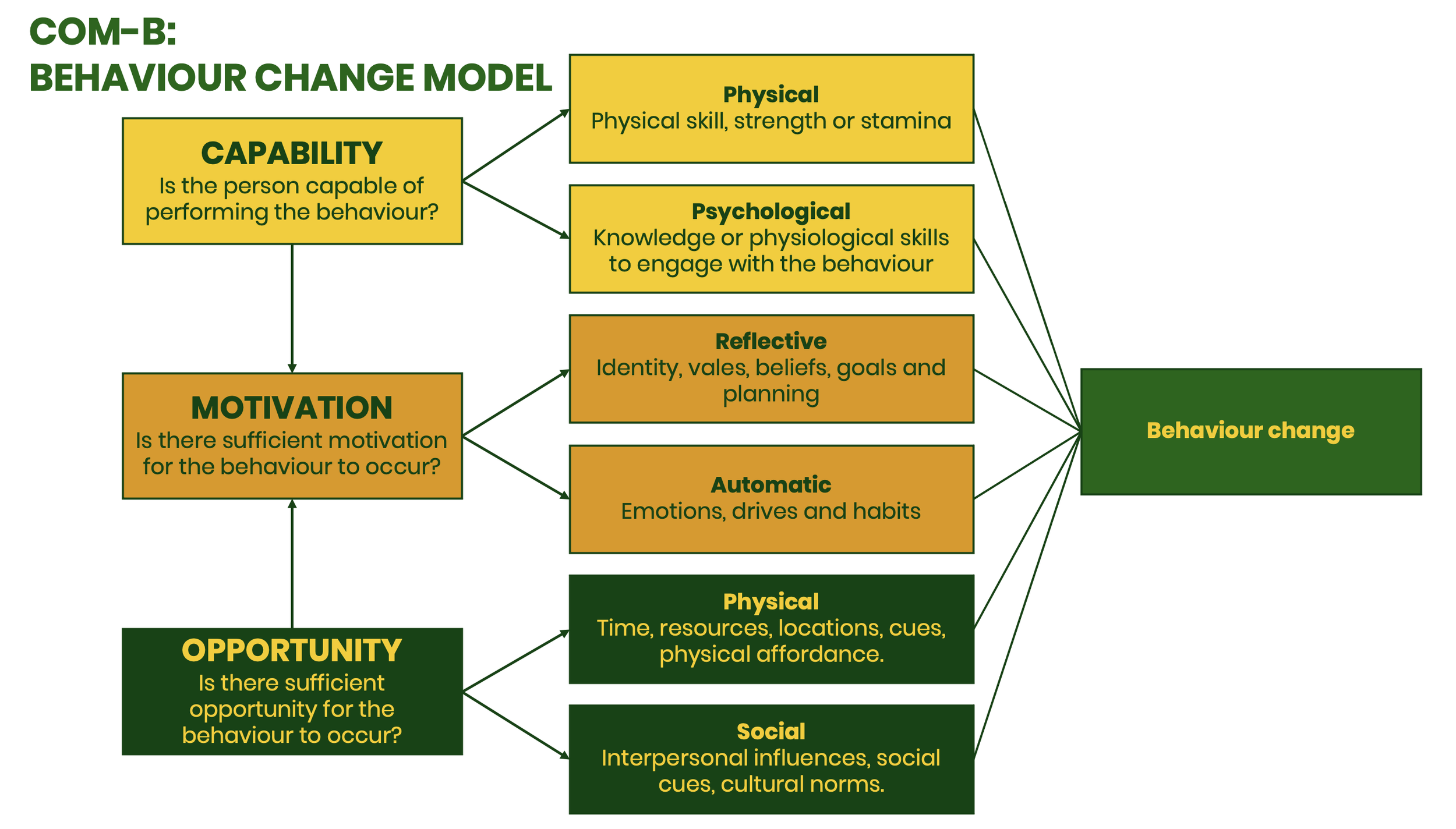
The COM-B behaviour change model - Centre for Behaviour Change at University College London
3. It’s scary
We all see the headlines - floods, heatwaves, droughts, storms - and rising global temperatures. This stuff is scary, and the natural impulse is to bury your head in the sand and hope someone else is dealing with it.
I design space for people to explore those reactions rather than pretending they don't exist, and then help people channel them towards positive action.
Action doesn't make the big challenge smaller, but it can make us feel less small in relation to it.
4. It’s about change
When is L&D not about change, I hear you shout at the screen. I’m with you - all learning at it’s heart is (or should be) about behaviour change.
But sustainability calls for BIG change - across people, across teams and across organisations. And change is hard; it’s hard to shift from one way of doing something to another, especially if the current way seems to be working fine.
So, I design sustainability learning around what happens after the training, not just what happens in the room. I help people identify actions they can take, anticipate what might get in the way and build the confidence and support to keep going. And I’ll often build in accountability to ensure action happens.
Here, it’s useful to determine where your audience is on the ‘change ladder’ – how ready they are to change and act. Understanding their readiness helps you decide what training is needed, and resources or tools might be required, and what support they might need.
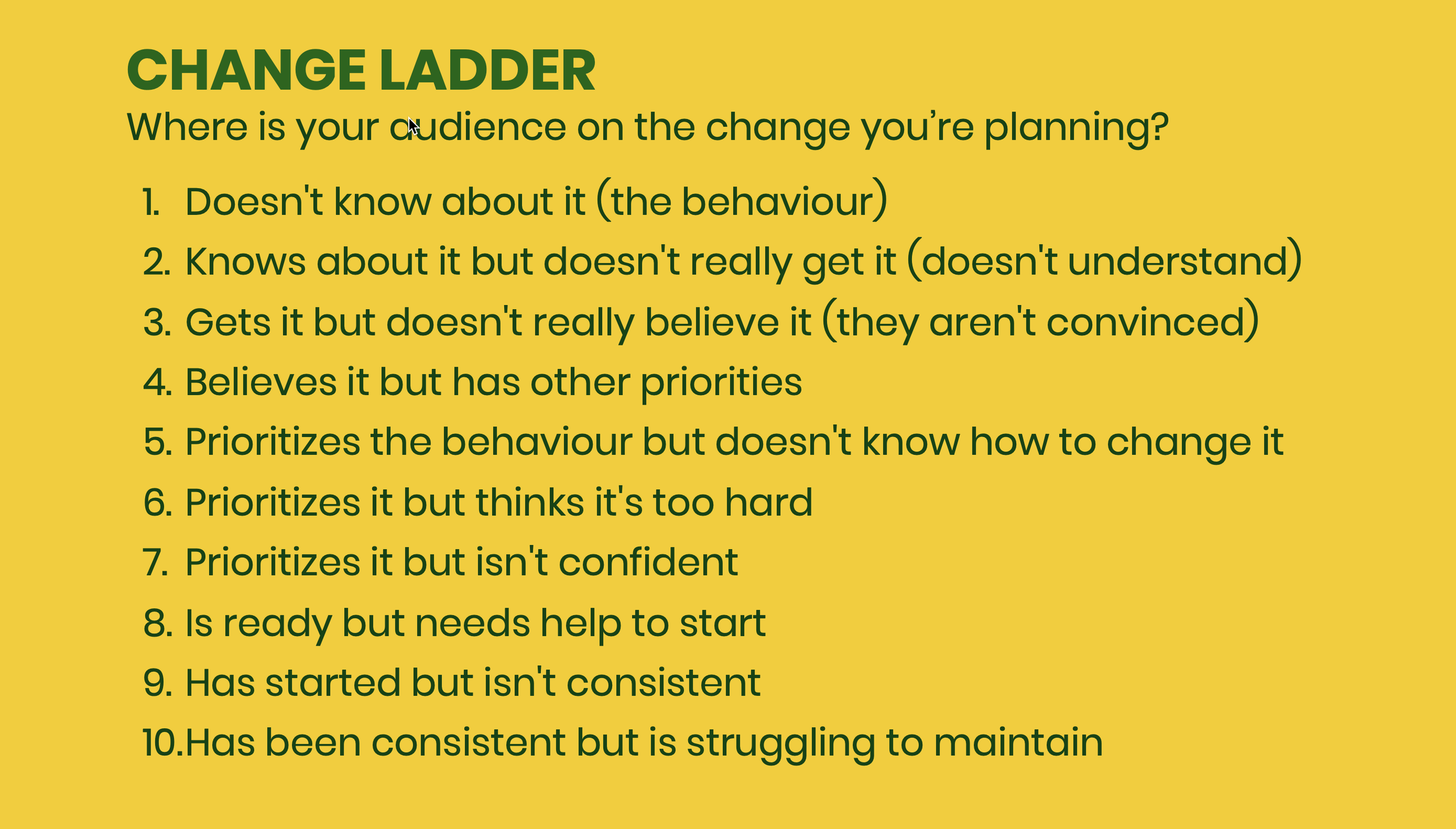
10 steps of change.
Yes, and…
Sustainability learning isn’t just about helping people know more. It’s about helping people navigate complexity, emotion and change, and find their part in taking action.
Well thought-out and designed sustainability learning moves people from knowing, through caring, and into action.
And that’s what I help organisations with.
I design and deliver sustainability learning that meets people where they are, helps them make sense of complexity and supports them to turn sustainability ambitions into action.