Connection: good for people, good for the planet
Guys, it turns out that same thing that helps people flourish is also good for the planet!
This week I stumbled across three ideas that seem to be saying exactly that – and they’re all linked.
Here’s what’ I’ve learnt this week:
The happiest people feel loved
Children need attachment to thrive
To be relational is to be ecological
Let’s take them one at a time.
1) The happiest people feel loved
Professor Sonja Lyubomirsky’s research has shown that the happiest people are the ones that feel loved. The feel bit is really important here. This isn’t a numbers game – to be happy you don’t need loads of friends.
What you need is friends and family that show they love you, and you have to feel that love.
What that means is real and deep connections; connections where you feel seen and understood, and you do the same for someone else.
How do you do that? It turns out we need to show our true selves – warts and all.
We need to let people see beyond the polished version we present to the world. And of course that's not always easy. Vulnerability can feel risky. We worry that if people see the messy bits, they'll like us less.
Real connection happens when we move beyond surface-level updates and start sharing what we really think, feel, hope and fear.
So happiness comes from being more fully yourself with the people who are already there, and showing and feeling love. Ready to give that a go?
Learn more in Sonja’s book ‘How to feel loved’, and listen to her talk about the book on this podcast.
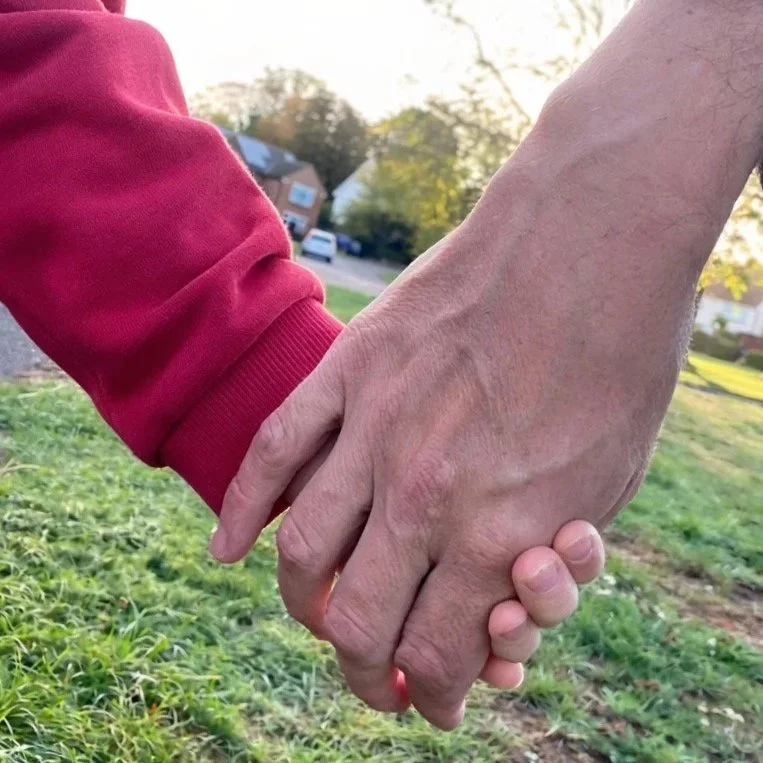
2) Children need attachment to thrive
I’m a dad – and I promise not to bang on about it too much. But parenting has taught me a lot of things. And one turns out to be quite counter-intuitive.
The more connection our children feel, the more independent they are.
Weird, huh? You’d expect that for a child to develop independence, you’d need to (gently) push them away. But that’s not what the science says.
Attachment theory shows that the more connection a child has with their caregiver, the more resilient, confident and independent they are.
And connection is a core need for children. Without secure attachment, children are more likely to experience anxiety, struggle with relationships and find it harder to explore the world with confidence – even into adulthood.
When children know that someone has their back, they become more willing to take risks, try new things and recover from setbacks. In other words: they build independence.
I think there's a lesson in that for adults, too.
We often celebrate independence as though needing other people is a weakness. But humans have never been wired to go it alone. Just as children flourish when they feel securely connected, adults thrive when they know they are loved, supported and understood (see above).
I’ve been learning about this from Dr Beckys excellent book Good Inside.
How does all this relate to the planet? Well…
3) To be relational is to be ecological
There's another idea that I heard about connection that I find fascinating.
The anthropologist and systems thinker Gregory Bateson spent much of his life arguing that humanity had made a profound philosophical mistake. We tend to see ourselves as separate from the systems we're part of: separate from nature. Separate from each other. Every man is an island and all that.
Bateson thought this was silly nonsense. And I think, generally, we now can all see that’s true.
We are not outside any system. We are inside them.
Ecologists and environmentalists understand this instinctively. A forest isn't just a collection of individual trees. It's a web of relationships between soil, fungi, insects, plants, animals, water and climate. And everything affects everything else.
The same is true of our relationships.
The therapist Terry Real uses a phrase that really struck me: our relationships are our biospheres. We live inside them (more from Terry on this and other topics here)
Think about it. If I'm consistently selfish, dismissive or unkind, I'm effectively polluting the emotional environment around me. And sooner or later, I'll be breathing that pollution back in through resentment, distance or disconnection from others.
Equally, acts of kindness, curiosity and care don't just benefit the people around us. They can also improve the environment we all share.
Once we recognise that we're part of the system - any system - rather than separate from it, connection stops being a selfless act. It switches to self-interest.
There’s something else here, too, on care. If we care about our relationships, we’re more likely to care about Mother Earth. The principle is the same: if we want to thrive, we need to take care of the relationships that sustain us.
To be connected with other people is to be connected to the systems we live in; relationalism is environmentalism.
And in conclusion…
This is also why I believe sustainability is fundamentally a people challenge – and why I help organisations with this challenge.
Most organisations don't lack targets, plans or technical expertise. Where change happens is through relationships. Through conversations. Through trust. Through people's willingness to listen, collaborate, challenge, learn and act together.
And those are the environments I create in my work – spaces where people can connect to each other and to Mother Earth.
From this week’s learning, I’m even more convinced that when people connect, things move. Learning sticks. Decisions improve. Collaboration grows. And change becomes much more likely.